

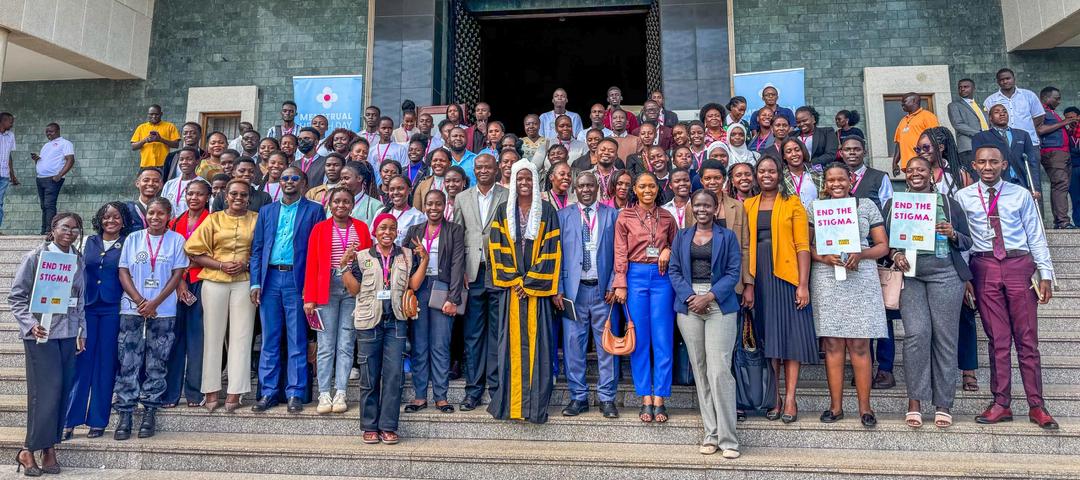
Stakeholders have called on government to develop a national policy on menstrual health to address growing concerns over school dropouts, stigma, and inadequate access to menstrual hygiene products among girls and young women.
The call was made during a Youth Mock Parliament on Menstrual Hygiene Management initiative, where participants urged authorities to treat menstrual health as a national development issue rather than a private matter.
The gathering brought together youth from universities and schools, alongside civil society organisations, to simulate a parliamentary sitting and deliberate on solutions to menstrual health challenges affecting girls across Uganda.
The session was chaired by Betty Takali, a law student at Uganda Christian University.
Participants debated ways to tackle increasing school dropout rates linked to menstrual hygiene challenges, while amplifying calls to end stigma and discrimination against girls and women during menstruation.
“We have structures like the National Youth Council and people within those structures can take responsibility to carry out sensitisation because girls are stigmatised during their periods by boys,” Takali said.
According to United Nations Population Fund coordinator for gender and youth, Laura Criado, many girls continue to miss school because of limited access to menstrual products, menstrual pain, stigma, and poor sanitation facilities.
“Girls, especially in rural areas, are significantly missing school during menstruation due to lack of menstrual products, menstrual pain, stigma and poor sanitation facilities,” she said.
A section of Members of Parliament who attended the youth plenary pledged to push the 12th Parliament to prioritise increased funding for menstrual hygiene management programmes.
Silas Aogon said legislators should support the development of a national policy to protect the dignity and productivity of women and girls.
“I urge fellow legislators to move a policy which should be developed so that our children, women, and mothers can do productive work without challenges arising from menstrual hygiene,” Aogon said.
Florence Akiiki Asiimwe emphasised the need to increase access to reusable sanitary pads, especially for girls in rural communities.
“My take-home is that girls should access reusable pads that can reach every family, especially in rural areas, to enable our daughters stay in school during their menstrual periods,” she said.
Speakers noted that menstrual health challenges remain more severe in rural communities, where many families struggle to balance basic household needs with the cost of menstrual hygiene products.
Mondo Kyateka, Commissioner for Youth and Children Affairs at the Ministry of Gender, Labour and Social Development, said government poverty alleviation programmes such as the Parish Development Model could help strengthen household incomes and improve access to menstrual hygiene products.
“By 2050, Africa will be home to 2.5 billion people, the majority of whom will be young people. We cannot talk about human capital development when many young girls are dropping out of school,” Kyateka said.
According to the 2024 report by the Office of the Auditor General on menstrual health and hygiene management in schools, 64 per cent of female learners surveyed missed school due to menstrual-related challenges.
Stakeholders described menstrual health as a matter of physical, mental, and social well-being that directly affects the dignity, education, and health of girls and young women in Uganda.
